
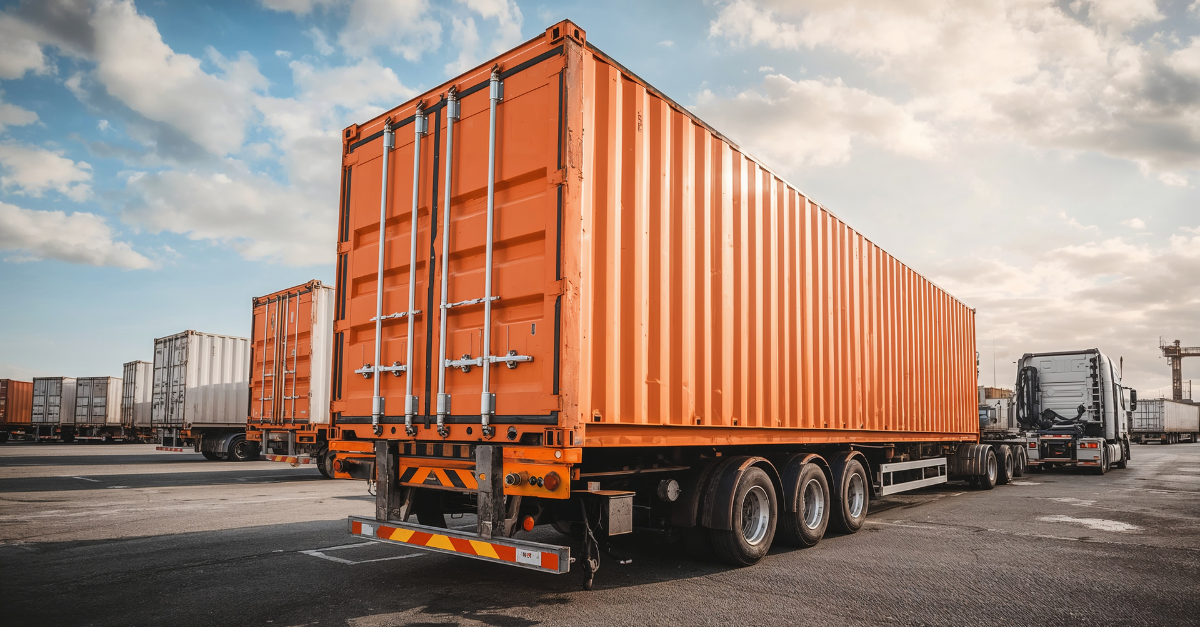
There's a question worth asking about every shipment before it moves: Who is actually behind the wheel, and do they meet the standard?
Canada's freight network depends on trucking at almost every stage. Containers arriving by ocean at Vancouver or Halifax eventually need a truck. Air cargo clearing at Pearson needs a truck. Cross-border shipments arriving in Windsor or Lacolle require a truck for the final move. Whether freight travels by sea, air, or ground to reach Canada, there's a good chance the last leg depends on a driver completing the job safely, legally, and on time.
That's why trucking compliance isn't just a trucking industry problem. It's a supply chain problem. And it's one shippers can't afford to ignore.
When a Carrier Fails, Everyone Feels It
The freight industry has seen growing concerns over the past several years about carrier non-compliance, driver misclassification, wage disputes, insurance gaps, and unsafe operating practices. Most Canadian carriers operate professionally and responsibly, keeping freight moving every day without incident. But problems within even a small segment of the industry can create real disruption for shippers, forwarders, and customs brokers downstream.
Here's why it spreads so quickly:
A container cleared by CBSA still needs to be picked up. If the carrier misses the window, storage charges and demurrage start to accumulate quickly. A retailer or distribution center operating on a tight receiving schedule doesn't easily absorb a missed appointment; it ripples through inventory, staffing, and customer commitments. And if the carrier handling damaged freight turns out to be underinsured or operating without valid authority, a straightforward cargo claim becomes a costly, complicated dispute.
A trucking issue rarely stays a trucking issue for long.
What Carrier Vetting Actually Looks Like
Choosing a carrier based on rate alone is one of the fastest ways to introduce risk into a supply chain. The price difference between a compliant, well-run carrier and a cheaper alternative can look significant on a spreadsheet, until something goes wrong.
Before freight moves, it's worth verifying:
- Active operating authority and carrier credentials
- Current insurance coverage at appropriate levels
- Safety records and compliance history
- Equipment suitability for the cargo type
- Driver qualification and training standards
These aren't bureaucratic checkboxes. They're the difference between a shipment that arrives on schedule and one that creates problems at the worst possible moment.
It's also worth knowing that transportation rules vary by province. Weight restrictions, hours-of-service enforcement, permit requirements, and inspection standards aren't uniform across Canada. A carrier well-suited for freight moving within Ontario may operate under different constraints than one handling freight into Quebec or British Columbia. Understanding those differences upfront prevents surprises mid-move.
Labor Instability Is a Real Operational Risk
Industry conversations about driver classification, compensation practices, and working conditions aren't just labor disputes. They have direct operational consequences for shippers.
Carriers facing high turnover, recruitment challenges, or internal instability tend to deliver less consistent service. Capacity gets harder to predict. Communication breaks down. Delivery windows become unreliable. The carriers that maintain strong driver retention and fair working conditions tend to be the same ones delivering consistent execution.
When you're evaluating a carrier, stability matters as much as capacity.
What This Means for Your Supply Chain
For importers and exporters moving goods through Canada, trucking compliance affects more than transportation costs. It influences border crossing efficiency, customs release timing, warehouse scheduling, and whether your product actually reaches your customer on time.
A shipment that clears customs still has to reach the destination. That final leg deserves the same scrutiny as every other part of the chain.
A few practical steps worth taking now:
- Review your carrier network. Confirm insurance is current, verify operating credentials, and check recent service performance. If you haven't looked at this in a while, now is a reasonable time.
- Build backup capacity. Identify secondary options for critical lanes before you need them, not while a shipment is sitting at a terminal waiting for a truck.
- Align your customs and transportation plans. Documentation that doesn't match across providers creates clearance delays. The freight and customs sides need to use the same information.
- Identify your highest-risk shipments. Not every shipment carries the same exposure. Time-sensitive cargo, high-value goods, and shipments with narrow delivery windows deserve extra attention in your contingency planning.
How StraitLink Approaches This
At StraitLink Global, we think carrier selection is a risk-management decision, not a pricing exercise.
As a Toronto-based freight forwarder and licensed Canadian customs broker with over 100 combined years of experience across our four partners, we coordinate transportation alongside customs planning rather than treating them as separate conversations. When we work with transportation providers, we focus on compliance, insurance, communication standards, and operational consistency, because the carriers we work with reflect on every shipment we're accountable for.
We're also reachable when something changes. Four partners, all hands-on, available around the clock. When a shipment has a problem mid-move, you reach someone who knows your file, not a ticketing system.
If you're reviewing your carrier network, entering new Canadian markets, or looking for better coordination between customs clearance and transportation planning, we're a useful conversation to have before something goes sideways.