
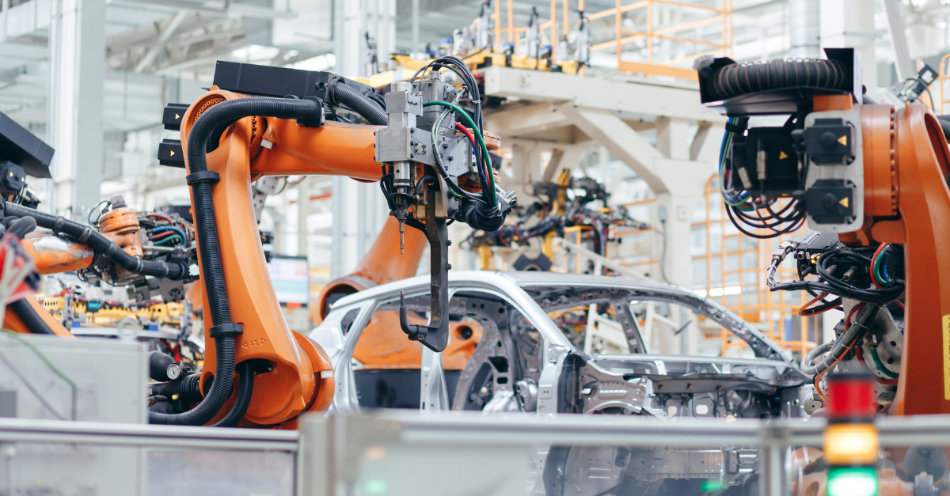
Where a vehicle gets built used to come down to labor costs, real estate, and proximity to the customer. Those factors still matter to automotive manufacturing. But increasingly, the conversation in automotive boardrooms involves a different set of questions: What’s our tariff exposure to imported components? Do our parts qualify under CUSMA rules of origin? What happens to our production schedule if cross-border clearance gets complicated? Can this supply chain continue operating smoothly if trade policy changes again next quarter?
Those aren’t logistics questions. They’re manufacturing strategy questions. And the fact that customs and trade compliance now sits at that table tells you a lot about where the industry is headed.
Why Canada Still Makes Sense for Automotive Manufacturing
Canada’s position in North American automotive production is built on real structural advantages: deep integration with US supply chains, CUSMA market access, proximity to major US assembly and distribution markets, and established highway and rail infrastructure connecting Ontario to the industrial Midwest.
That integration is also what makes trade policy volatility so consequential. When a component crosses the border multiple times during production (raw material in, partially assembled subcomponent out, finished part back in), the customs implications compound at every stage. A supply chain that runs smoothly under one tariff regime can look very different when policy shifts. That’s not a hypothetical. It’s what manufacturers operating in Canada have been navigating in real time.
The Growing Importance of Rules of Origin
For automotive manufacturers, CUSMA qualification isn’t a paperwork exercise, it’s a cost structure decision.
Whether a finished vehicle or component qualifies for preferential tariff treatment under CUSMA depends on the actual source of its content. Regional value content requirements, steel and aluminum sourcing rules, and the specific documentation required to support an origin claim all carry real financial weight. Get the classification right, and your product moves efficiently at the appropriate duty rate. Get it wrong (or fail to document it adequately) and you’re exposed to penalties, duty recovery assessments, and the kind of audit pressure that disrupts production timelines.
A missed origin declaration or an incorrect tariff classification can create problems very quickly in an industry where components are sequenced to arrive just ahead of the line that needs them. There’s no buffer for a customs hold when production is running.
This is where customs expertise becomes a manufacturing input, not an afterthought.
Components Moving Across Borders Multiple Times
The complexity compounds in CKD and SKD manufacturing models, where components are shipped across borders in various stages of assembly and then finished domestically. Each crossing is a customs event. Each one requires accurate classification, correct valuation, and documentation that matches the contents of the shipment.
Add bonded freight, inventory coordination across facilities in multiple countries, and sequencing requirements that tie customs clearance timing directly to production schedules, and you have a supply chain that has essentially zero tolerance for documentation errors or communication delays.
This is not unusual for automotive supply chains operating in Canada. It’s the baseline. And it’s why manufacturers are increasingly evaluating their customs broker not just on cost, but on reliability, responsiveness, and whether that broker actually understands what a line-down situation costs.
Why Customs Has Become Part of Manufacturing Strategy
A few years ago, it was reasonable to treat customs clearance as a back-office function, something that happened after the real decisions were made. That’s no longer the case.
Manufacturing decisions in the automotive sector now factor in border clearance timing, permit requirements, tariff forecasting under multiple policy scenarios, and contingency routing if a primary lane becomes unreliable. Supplier geography is evaluated not just on cost but on the customs complexity it introduces. Brokerage coordination is built into production planning, not bolted on afterward.
The companies managing this well aren’t reacting to trade policy changes. They’re planning around the possibility of change, building flexibility into their supply chains before they need it, not after a disruption forces the issue.
At StraitLink Global, we’ve watched this shift happen in real time. The clients who come to us asking about tariff classification, country-of-origin determinations, and CUSMA qualification aren’t asking academic questions. They’re asking because the answers affect their cost structure, their production schedule, and their ability to compete.
What Manufacturers Are Prioritizing Now
The operational priorities we’re seeing from manufacturers navigating the current environment:
Shorter, more legible supply chains, with cleaner, easier-to-verify origin and compliance documentation. Diversified sourcing that reduces single-country exposure when policy shifts. Alternate routing options are identified before they’re needed. Customs accuracy is treated as a production requirement, not an administrative function. Cross-border partners who communicate proactively rather than go dark when things get complicated.
That last one matters more than it might seem. Production lines cannot wait for missing paperwork. When a shipment is held, and the broker isn’t reachable, the cost isn’t just the clearance delay, it’s the downstream impact on everything scheduled around it.
Where StraitLink Fits
StraitLink Global is a licensed Canadian customs broker and full-service freight forwarder with over 100 combined years of experience across our four partners. We coordinate automotive freight into Canada, manage customs documentation, and support cross-border flows between Canada and the US, handling Canadian customs clearance directly and working with our trusted US partner network for US-side clearances.
What that means practically: clients reach a decision-maker, not a ticketing system. We monitor US-Canada tariff developments and trade policy shifts in real time and actively investigate legitimate pathways to minimize tariff exposure: proper classification, country-of-origin determinations, valuation reviews, and substantial transformation analyses. As Irene puts it: “We look for solutions, not loopholes, but ways to do the right thing for them.”
We’ve helped importers restructure their import and export flows to reduce surtax exposure significantly. We flag issues before freight moves, not after it’s been held at the border. And we’re available around the clock, because production schedules don’t run on business hours.
If your automotive supply chain is operating in Canada (or you’re evaluating what cross-border complexity looks like before committing production), we’re a useful conversation to have early.